
This unit covers heart anatomy and physiology — explaining how cardiac muscle and electrical activity work together to drive the cardiac cycle and support circulation.
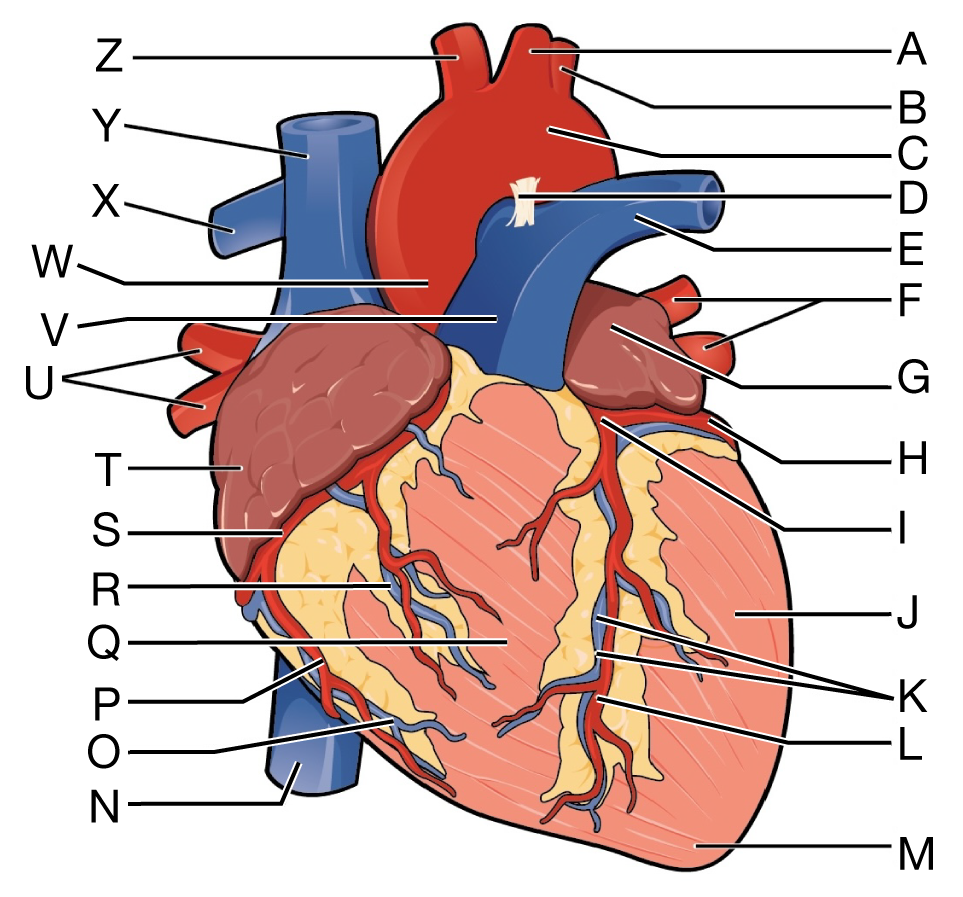
Lettered anterior view of the external anatomy of the heart; A left common carotid artery; B left subclavian artery; C aortic arch; D ligamentum arteriosum; E left pulmonary artery; F left pulmonary veins; G auricle of left atrium; H circumflex artery; I left coronary artery; J left ventricle; K great cardiac vein; L anterior interventricular artery; M apex; N inferior vena cava; O small cardiac vein; P right marginal artery; Q right ventricle; R anterior cardiac vein; S right coronary artery; T right atrial auricle; U right pulmonary veins; V pulmonary trunk; W ascending aorta; X right pulmonary artery; Y superior vena cava; Z brachiocephalic trunk.
🔍 View a labeled version of this diagram


Each of the seven topics below includes flashcards, click-on diagram challenges, multiple-choice quizzes, and free-response questions with AI coaching — so you can learn, practice, and review at every stage.

  1. Heart Anatomy
  2. Heart Valves
  3. Congenital Heart Defects and Heart Disease
  4. Cardiac Muscle Conduction
  5. Cardiac Cycle
  6. Cardiac Physiology
  7. The Heart: Cumulative Review

Attribution: Portions of this Table of Contents were adapted from Anatomy and Physiology by OpenStax, used under CC BY 4.0.