

Interactive Anatomy and Physiology Practice: Before Class, After Class, Before the Exam

New from Glenn Wolkenfeld at Learn-Biology.com: An interactive anatomy and physiology course with flashcards, quizzes, diagram challenges, and AI-graded short-answer questions for every unit. The first unit, the Cardiovascular System: The Heart, is ready now. 

Everything students need to master A&P

Interactive AP Biology Tutorials

A&P has one of the highest content loads in high school or college science. Our activities give students the structured retrieval practice they need — not just before the test, but throughout the unit.

Learn-Biology Platform Leads to Improved Grades and Test Scores in AP Biology

Students tend to study A&P the night before the exam. Our website and app make meaningful practice available before class, after class, and before the test. As studying spreads out, retention improves.

Created by award winning biology educator

Built on the same approach that helped thousands of students master AP Biology — now designed for A&P, with content matched to leading texts like OpenStax and Marieb.

Four Activity Types – Each One Designed to Build Understanding

AP Biology Flash Cards

Flashcards

A&P vocabulary is relentless — and most of it is anchored to diagrams. Our flashcards connect terms to structures so students build the visual fluency they need for labs, practicals, and exams.

AP Biology Prep Biomania AP

Multiple Choice

Most multiple choice questions just mark answers right or wrong. Ours explain why — and repeat missed questions until students get them right. Every quiz leads to mastery.

AP Biology Click On Challenges

Tap Challenges

Students click directly on diagrams to identify structures — the same skill tested in lab practicals. Built-in hints guide them toward the answer without giving it away.

AP Biology FRQs

Short answer questions

Short-answer questions with AI coaching give students writing practice without adding to your grading load. Students get immediate, substantive feedback on their scientific reasoning.
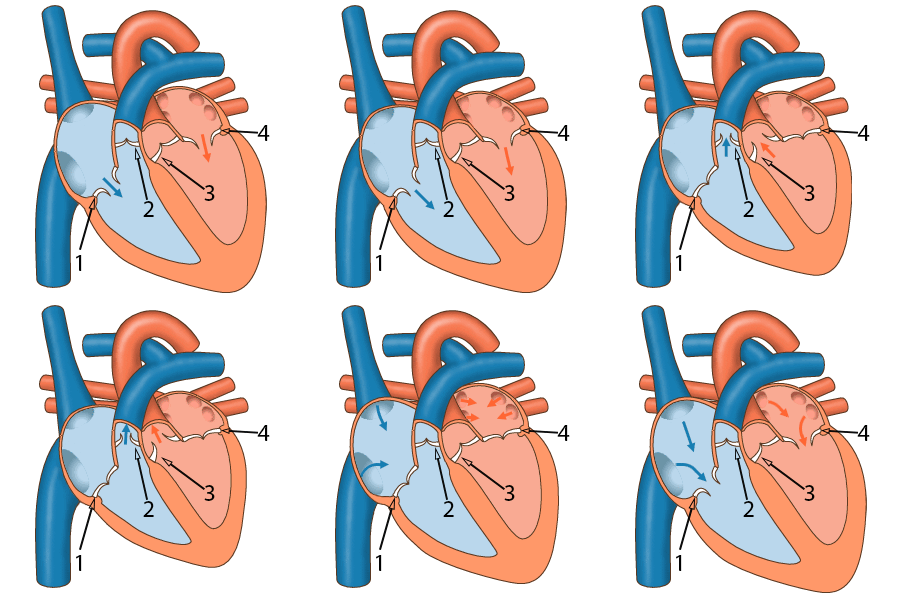
Demonstration Unit (current working example)

Free to explore with any Learn-Biology.com account — free trials welcome (no credit card required).

Anatomy of the heart animation. A cross-section shows the four chambers with blood flow indicated by blue and red arrows. Four numbered labels identify the valves. As the heart beats, the atrioventricular valves (1 and 3) and semilunar valves (2 and 4) open and close in coordination to direct blood flow.

Student Progress and Performance Tracking

  • Instructors can monitor student completion and performance across diagrams, quizzes, and short-answer activities

  • Results can be used for homework, classwork, participation, or formative assessment, depending on how the course is taught

  • Performance data helps instructors identify gaps, follow up with individual students, and support learning before tests or practicals

Human Anatomy and Physiology Main Menu

Levels of Organization

1. Introduction to Anatomy and Physiology

2. The Chemical Basis of Life

3. Cell Structure and Function

4. Cellular Respiration and Metabolism

5. Tissues of the Body

Support and Movement

6. Integumentary System

7. Bones and Bone Tissue

8. Axial Skeleton

9. The Appendicular Skeleton

10. Joints

11. Muscle Tissue Structure and Function

12. The Muscular System: Anatomy

Regulation, Integration, and Control

13. Neurons, Synapses, and Neurotransmitters

14. Anatomy of the Nervous System

15. The Somatic Nervous System

16. The Autonomic Nervous System

17. The Special Senses

18. Endocrine System

Energy, Maintenance, and Environmental Exchange

19. Digestive System

20. Principles of Nutrition

21. The Respiratory System

22. The Urinary System

23. Fluid, Electrolyte, and Acid-Base Balance

Fluids and Transport

24. The Cardiovascular System: Blood

25. The Cardiovascular System: The Heart

26. The Cardiovascular System: Blood Vessels and Circulation

27. The Lymphatic and Immune System

Reproduction and Development

28. The Reproductive System

29. Development

Special topics

30. The Human Microbiome

Attribution: Portions of this Table of Contents were adapted from Anatomy and Physiology by OpenStax, used under CC BY 4.0.

Sign up to stay informed as new units are released — and help shape what gets built next.

Get Early Access — Free

* indicates required
We'll notify you when new units launch, and occasionally invite you to give feedback.
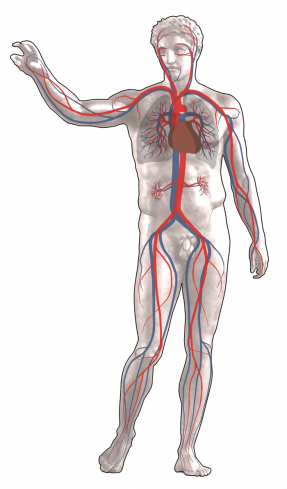
Decorative illustration of a human figure with circulatory system shown